Previous Article
The Pride of the Toji (1981)
Learn About the History and Culture of Kokushu



In earlier times, when drinking alcoholic beverages was not yet an everyday custom, sake was regarded as something special, offered during sacred rituals and festivals. In Shinto practice, there exists the concept of shinjin kyōshoku—literally “sharing food between gods and humans.” Offerings of harvests and local products are first presented to the deities, and after the ritual, the offerings are consumed by people. By partaking of the same food as the gods, people strengthen their spiritual connection and receive divine protection. Among these offerings, sake made from rice holds a particularly important role as omiki, sacred sake dedicated to the gods.
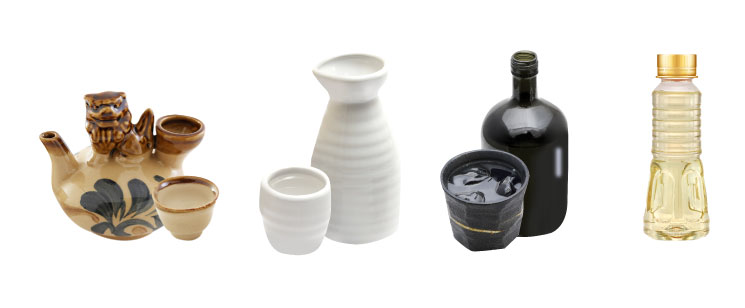
The vessel used to drink this sake is called a sakazuki (sake cup). One theory holds that the word tsuki once meant “vessel,” so sakazuki literally refers to a vessel for holding sake. Exchanging cups of sake or sharing a toast historically signified that a wish had been granted or a promise had been sealed—whether between gods and people (such as prayers for a good harvest or rain) or between people themselves (such as in marriage or adoption ceremonies). For this reason, the sakazuki was sometimes described as a “contract without words.” Although it is the smallest vessel placed on the dining tray, the profound meanings attached to it have given it a strong presence, inspiring the creation of many finely crafted cups.
With the development of brewing techniques, a method of sake production similar to that used today was established by the mid-Edo period. As a result, sake gradually became a familiar luxury enjoyed in everyday life. Likewise, sakazuki cups came to be produced in a wide variety of forms. They are made from many materials, including wood, lacquerware, pottery, porcelain, glass, and metal. Each material has its own characteristics, and it is well worth experimenting with different vessels to discover how they complement different types of sake.
Porcelain and glass, for example, are odorless and tasteless, allowing the flavor of the sake to be experienced directly without alteration. They pair well with almost any type of sake and are indispensable for comparative tastings. Some people also enjoy drinking sake from vessels that impart subtle aromas from the material itself, such as wood or clay. For chilled sake, a well-chilled glass or metal cup can enhance the refreshing sensation. When appreciating the color of the sake, pure white porcelain is ideal, although the elegance of vermilion lacquer adorned with gold decoration has its own charm.
Beyond material, the shape of the vessel also plays an important role. For warmed sake, a deeper cup may help retain heat, while those who prefer lightly warmed sake might favor a shallower form. A wide rim allows the sake to spread across the entire palate, bringing out the complex flavors found in aged products. The thickness of the rim, the weight of the vessel—once one begins to consider such details, the possibilities are endless. Yet, when seeking the perfect pairing of sake and cup, perhaps the next sakazuki raised for an evening’s drink will lead one to discover entirely new dimensions of enjoyment.
Yuko Imagawa
General Manager of Ichinokura Sakazuki Art Museum